

Form N-400 – Naturalization Timeline, Cost, and Requirements

30 Aug. 2022
Form N-400 – Naturalization Timeline, Cost, and Requirements
Citizenship in the United States is possibly the most valuable benefit any immigrant can receive. It is commonly the result of a long journey spanning many years and miles. Over the last three years, over 2.2 million permanent residents have become citizens of the United States.
Everyone applying for citizenship application through the naturalization process must complete Form N-400, Application for Naturalization, prepared by the government agency United States Citizenship and Immigration Services (USCIS). The form collects basic biographic information about applicants and asks questions to determine whether you meet all citizenship requirements.
This complete guide will help you understand everything about the Naturalization process to become an American citizen.
Check out US Citizenship Test Questions and Answers to pass the naturalization interview.
What exactly is Form N-400?
Form N-400 (officially known as the Application for Naturalization) is a government form used by green card holders who have met certain eligibility requirements and are ready to apply for US citizenship.
Filing this form with the United States Citizenship and Immigration Services (USCIS), a government agency that is part of the United States Department of Homeland Security (DHS), is the first step in the process of naturalization or becoming an American citizen.
How long does Form N-400 take to process?
Naturalization application or citizenship application takes an average of 14.5 months to process in the United States. However, this is only the wait time for application processing. The overall naturalization process entails more steps and a longer timeline for citizenship.
Here’s a brief breakdown of how long the naturalization process takes, from application to swearing-in ceremony (with helpful details on what to expect at each step further down):
Step 1: Process your Naturalization Application (Form N-400 processing time: 14.5 months average)
Step 2: Attending your biometrics appointment: 0 additional months
Step 3: Attending your citizenship interview and exam: an additional 4 months (average)
Step 4: Waiting for a decision on your application: 0-4 months
Step 5: Take the Oath of Allegiance and receive your Naturalization Certificate: 0 to 1.5 months
In total, Naturalization takes between 18.5 and 24 months.
It is important to note that the wait and processing times listed in this guide are only official averages and estimates and do not account for potential processing delays.
In practice, depending on where the applicant lives, the naturalization process may be shortened (for example, one year). This is due to the fact that some USCIS field offices process applications much more quickly than others.
How much is the filing fee for Form N-400?
The current naturalization filing fee for applying for US citizenship is $725.
This total filing fee includes $640 for application processing and $85 for biometrics services, both of which are non-refundable regardless of whether an application is approved or rejected by the government agency. However, some applicants may be able to have these fees reduced or waived entirely.
Not everyone is required to pay the full amount of government fees for application for naturalization. Those seeking citizenship in the United States based on military service are exempt from both the application filing fee and the biometrics fee.
Only the biometrics fee is waived for applicants who are 75 and older. Everyone else must pay both fees unless they qualify for a fee waiver or reduction based on their income.
Who is eligible to file the Form N-400 application?
Naturalization eligibility is generally determined by several factors, including:
- How long have you had your green card?
- How long have you physically resided in the United States?
- Whether you’ve served in the United States military (and, if so, whether it was during peacetime or wartime).
If you have a green card and no special circumstances, you can apply for US citizenship 5 years after receiving your green card. You must also have physically resided in the United States for at least 30 months (two and a half years) of those five years.
If you have been married to a US citizen for at least three years and have lived with your spouse during that time, you can apply to become a US citizen at least 3 years after receiving your green card. You must also have lived in the United States for at least 18 months (one and a half years) out of the three years, and your spouse must have been a U.S. citizen for at least three years.
If you are the widow or widower of a U.S. citizen who died while honorably serving in the United States military (and you were living with them at the time of their death), you can apply for U.S. citizenship at any time as long as you have a green card (permanent resident status) at the time of your citizenship interview.
You do not need to have held a green card for a specific number of years or physically lived in the United States for a specific number of months before applying.
If you’ve served in the United States military for at least one year during peacetime, you can apply the application for naturalization while on active duty or within six months of honorably separating from the military. You do not need to have held a green card for a specific number of years or physically lived in the United States for a specific number of months before applying to become a naturalized citizen.
If you served in the United States military for less than one year during peacetime, you can apply for citizenship five years after receiving your green card. You must also have spent at least 30 months (or two and a half years) of those five years physically in the United States.
If you served in the United States military for at least one year during peacetime and are applying after six months of honorably separating from the military, you can apply to become a citizen of the United States five years after receiving your green card. You must also have spent at least 30 months (two and a half years) of those five years physically in the United States.
If you served in the United States military for any length of time during a war, you can apply at any time and do not need to get permanent residence. You (or your military spouse) must have been physically present in the United States (including U.S. territories) or aboard a U.S. vessel when you enlisted, re-enlisted, or extended your service.
You do not need to have held a green card for a specific number of years (if you have one) or physically lived in the United States for a specific number of months before applying for citizenship.
Requirements for the Naturalization process
In addition to waiting three or five years after receiving your green card (unless you apply based on qualifying military service), you must also meet the following citizenship eligibility requirements to begin your application for the naturalization process to become a US citizen:
- You must be at least 18 years old to take part.
- You must not have spent more than six months outside the United States during the three or five-year waiting period.
- You must have spent at least three months in the state where you intend to apply for citizenship.
- You must have good moral character, which is broadly defined as a character that meets the standards of your community’s average citizens. More specifically, it means you did not have certain types of criminal history on your record at any time before filing or other crimes such as murder, illegal gambling, or intentionally lying to the US government to gain immigration benefits, and you did not lie during your naturalization interview. The government decides whether an applicant meets this requirement on a case-by-case basis.
- You must pass a two-part naturalization test: A basic English language test (covering reading, writing, and speaking skills) and a civics test (covering knowledge of U.S. history and government).
- You must be willing to serve in the United States military or civilian service in the United States if called upon.
- If you are male and have lived in the United States between the ages of 18 and 25, you must register with the Selective Service System.
- You must be prepared to defend the United States Constitution.
Can I submit my N-400 online?
Yes, you can file your N-400 online unless you are applying from abroad or for a fee reduction or waiver, in which case you must use a paper Form N-400 application and mail it.
To apply online, you must first create an online account with USCIS and electronically sign your application (by typing your full name at the end of the application).
What address should I send my N-400 form to?
The address where you send your N-400 completed application and materials is determined by whether you file online or by mail. If you file by mail, the USCIS address to which you send your materials will be determined by your state of residence and the delivery service you select (U.S. Postal Service, FedEx, UPS, or DHL).
If you’re applying based on your (or a family member’s) military service, you’ll need to send your N-400 materials to a specific address, depending on the delivery method you select.
IMPORTANT: Make a copy of your completed N-400 before submitting it to USCIS. Your citizenship interview will be heavily focused on the responses you provided on your naturalization application. It’s essential to go over those responses before your interview.
Documents Required for N-400
All applicants for naturalization must submit supporting documentation with their Form N-400. If you file your application online, you must upload digital copies of these documents (scans or photos) to your online USCIS account. Don’t worry if you don’t have all of these documents. The good news is that you can begin working on your application right away while you gather your supporting documents. You don’t need every document to get started.
All applicants must submit the following documents:
- A photocopy of both sides of your green card (Form I-551, also known as the Permanent Resident Card).
- Payment of the application fee (by check or money order, with your A-Number written on the back, or by credit card using Form G-1450)
Depending on their circumstances, some applicants must submit additional supporting documents with their N-400, such as:
- If you are married or were previously married, you must provide proof of your current marital status (marriage certificate, divorce papers, marital history, annulment certificate(s), and/or death certificate(s) for former spouses).
- If you live and apply from abroad, you must provide two 2-inch-by-2-inch passport-style photos.
- If you’re applying for citizenship based on your military service, fill out Form N-426, officially known as the Request for Certification of Military or Naval Service.
- Form N-648, also known as the Medical Certification for Disability Exceptions, is required if you are applying for a citizenship exemption based on a qualifying medical condition.
Can US Citizenship and Immigration services reject my Form N-400?
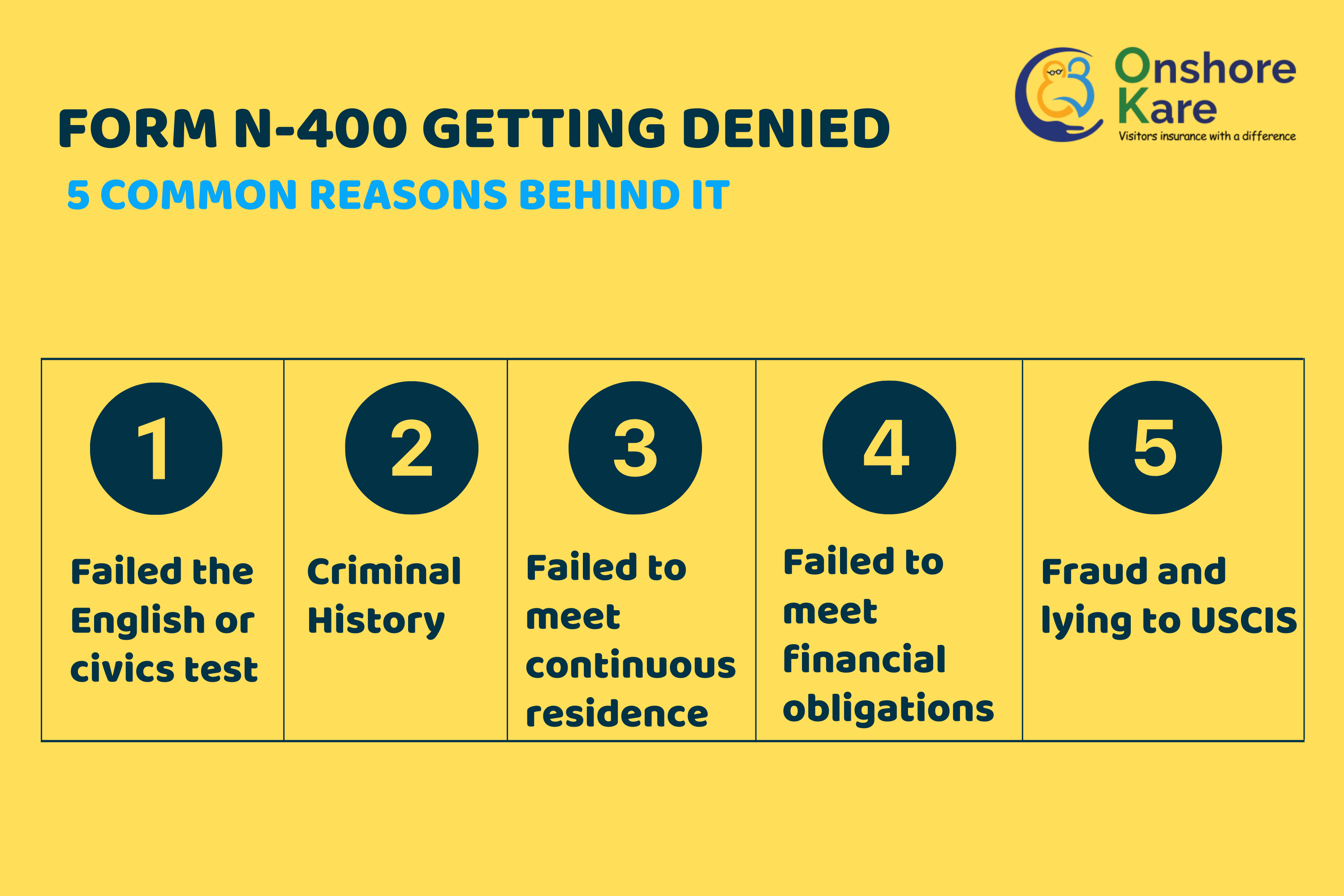
Instructions for Form N-400
Here are some general guidelines for completing your Application for Naturalization:
- Completely answer all questions. If you leave out any important information, USCIS may delay or even reject your application. If you do not know the answer to a question, contact an immigration lawyer who can clarify the question. The immigration attorney can provide other instructions on how to complete the Form N-400 application. The official Form N-400 instructions also explain.
- When you are unable to provide all of the information on the application form, use additional sheets of paper. When providing a list of all your trips outside the United States, you may need to use additional sheets of paper.
- Always write the section number, your full name, Alien number, and the page number to which this sheet of paper refers on the sheet of paper.
- Avoid making changes to the application form. If you make a mistake, simply print out another Form N-400 sample and start over. USCIS may reject your application for naturalization if you attempt to correct the data on the form.
- Remember to sign the USCIS form before sending it to USCIS, or your application will be rejected.
- Fill out the physical USCIS form correctly with block letters. Cursive handwriting can be difficult to scan automatically, and USCIS may reject your application and deny citizenship if it is too difficult to read.
- Form N-400 should not be mixed with Form I-90, Application to Replace Permanent Resident Card. When your permanent residence card is mutilated, damaged, or expired, fill out Form I-90. If you want to become an American citizen, fill out Form N-400.
- Read the full N-400 Instructions, or you can consult an immigration lawyer if you need them to provide legal advice about Form N-400.
Frequently asked questions
What should I do if I have relocated since submitting my application?
If you relocate after submitting your N-400, you must notify USCIS within 10 days of getting your new address. This ensures that you do not miss any notices sent to you by USCIS.
Check out how to report a change of address to USCIS to know why it is important to inform USCIS about your relocation.
I am currently enrolled in college. What should my physical and mailing addresses be on my application?
The current physical address you must use is determined by where you intend to attend your future citizenship interview and exam appointment. Your ZIP code will determine the location of your appointment.
If you go to college in San Antonio but live in Houston, you must provide your ZIP code in San Antonio if you want to attend your interview and exam at the San Antonio field office or your ZIP code in Houston if you prefer the Houston field office.
You must use the address where you want to receive all written correspondence from USCIS as your mailing address. Because these letters contain sensitive information, many people prefer to receive their mail at their actual home address.
What should I expect during my interview after submitting THE online Form N-400?
USCIS will send you an appointment notice for your interview after you file Form N-400. The interview, which usually lasts about 20 minutes, is your chance to confirm the information you submitted with your application. The USCIS officer may also inquire about your background.
What is the Form OF N-400’s three-year rule?
If you are married to a US citizen and have been a permanent resident in the US for at least three years, you may be able to file Form N400 to become a US citizen. If you obtained your permanent citizenship through another path, you may have to wait five years before you can naturalize.
What is the difference between Forms N-400 and N-600?
If you are a green card holder who is eligible and ready to apply for US citizenship, you can do so by submitting Form N-400 to USCIS.
If you are not currently a U.S. citizen but one or both of your parents are, you may apply for citizenship using Form N-600 (Application for Certificate of Citizenship). You must be under the age of 18 and currently residing in the United States to be eligible. If you are not in the United States, you can apply for a passport through the United States State Department.
Is it possible to file Form N-400 while my Form I-751 is still pending?
If you filed Form I-751 (Petition to Remove Conditions on Marriage) to apply for a full green card after receiving your conditional green card (permanent resident card) you may be eligible to apply for naturalization while your I-751 is still being processed.
Read A Complete Guide to Form I-765 if you want to obtain a work permit in the US.
You can still file Form N-400 if this occurs. However, you should include the receipt number sent by USCIS to confirm the processing of your I-751 petition, known as Form I-797 (Notice of Action), with your application.
Important Links
Visit the USCIS website to know more about how to create a user’s online account. Also, check the 10 steps to the Naturalization process to understand the process of becoming a US citizen.
Conclusion
Gaining US citizenship provides many benefits to a resident of the United States, but it also entails new responsibilities. The steps in filling out Form N-400 are not simple. We hope our complete guide has helped you learn more about becoming an American citizen.
Make sure you have understood the full instructions before applying for the Naturalization process or reach out to a law firm and consult an immigration attorney if you need more information.