

How to travel with prescription drugs – Complete Guide
31 Jul. 2022
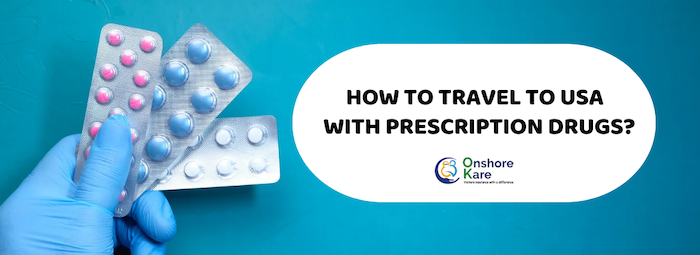
Many travelers who take prescription medications are concerned about bringing a pill case on board airlines.
While every item carried onboard an airplane must be examined, you should have no trouble bringing prescribed medicines on your flight.
This complete guide will help you learn how to travel safely with prescription medications.
Watch a short video on how to carry prescription medicines on your visit to the USA
Rules for Taking Prescription Drugs Through US Airport Security
The Transportation Security Administration (TSA) allows many travelers to bring prescribed drugs or medically required liquids and other medications such as liquid medications or sinus medications onto planes in the United States.
Medication in 3.4 ounces (100 milliliters) or smaller labeled containers may be placed in a one-quart size clear zip-top plastic bag with your other personal liquid and gel goods.
If your prescribed medication comes in larger containers or bottles, you must put them in your carry bag separately. When you reach the airport security checkpoint, you must disclose all medications or medical conditions to the security officer.
Items that are permitted include:
- Prescription and over-the-counter medicines/supplies, like contact lens saline solution
- Water, juice, “liquid nutrition” (such as Boost), and gels that a traveler with a medical condition or impairment needs to eat inflight
- Organ transplants, bone marrow, and other life-sustaining elements
- Mastectomy and other cosmetic or medical enhancement products including gel or liquid
- Baby formula with breast milk
- Bring ice packs to store frozen gels or liquid medicine.
TSA (Transportation Security Administration) tips for Flying with Prescription Medications
The Transportation Security Association’s website also includes the following prescription medicine travel tips:
- Unless your prescription is in liquid form, it is not essential to present it to or alert the TSA officer about any medication you are traveling with.
- TSA accepts reasonable amounts of medication in liquid form or liquid medication in carry-on luggage weighing up to 3.4 ounces.
- Medically required liquids do not need to be stored in a zip-top bag. However, at the beginning of the screening checkpoint process, you must inform the officer that you have medically necessary liquids.
- Medication in tablet or solid form is permitted in unlimited amounts or reasonable quantities as long as it is screened.
- Prescribed drugs or certain medicines can be transported in both carry-on baggage and checked baggage. Take these items in your carry-on in case you need them right away.
- The TSA does not require passengers traveling with medication to have medicines in prescription bottles, but each state has its individual laws surrounding prescription medication labeling, with which travelers must comply.
- X-ray is typically used to screen medications; however, if a passenger does not want a medication X-rayed, he or she may request an inspection instead. Before sending any objects through the X-ray tube, make sure to request an examination.
Security Checkpoint at the Airport
When you arrive at the security checkpoint, you, your travel partner, or a family member must place medically required liquids or gel substances in bottles or containers greater than 3.4 ounces before being given to a security screening officer.
You can either tell the screening officer about your prescription drugs or provide a written list. Bring doctor’s notes, original prescription bottles or containers, and other documentation to expedite the screening process.
How should you pack your prescription medication?
While the TSA recommends carrying only the prescription medicines and medical liquids needed for your journey in your carry-on bag, travel experts recommend carrying all doses of medications and medical supplies needed for your trip in your carry-on bags if at all possible.
Unexpected delays can leave you without enough medication because you won’t be able to access your checked baggage until you get to your ultimate destination.
Even if you have to go through additional screening at the TSA checkpoint, it is easier and safer to bring all of the prescription pills and medical liquids, in a pill case, that you will need on your trip, with you in your carry-on luggage.
Request a letter from your doctor outlining your medical problems and the medications you require. Place the letter in your carry-on bag. You’ll be more prepared if you’re questioned at security checkpoints or customs screenings this way.
Consider environmental conditions such as height and humidity that may affect your health or treatment. Your medication schedule may need to be adjusted by your doctor.
If you have a condition that could worsen during your journey, wear a medical alert bracelet that lists your conditions, medications, therapy, and contact information for your doctor.
If you are unable to convey your situation during an emergency, your flight attendants will have a better understanding of what is going on.
Information on International Screening
Several countries worldwide collaborate to build and maintain standard and effective airport security screening methods. This means you can store all of your small liquid and gel things in your zip-top bag and utilize it practically everywhere you travel.
What to Do If There Is a Problem at a TSA Checkpoint?
If you have any concerns during your security screening, discuss the matter with a TSA supervisor about your prescription medications. The matter should be resolved by the supervisor.
Bottom Line
Traveling with prescription drugs is not as simple as packing your toiletries while traveling internationally. It is important to take prescribed medications legally when you travel anywhere or to other countries.
So, plan ahead of time and do your research. The U.S State Department of the United States government is an excellent resource, check the website of the Transportation Security Administration to know more about travel-related information.