

How to become a US citizen?

5 Sep. 2022
If you want to become a U.S. citizen, you must swear allegiance to the United States Constitution. This status confers several advantages and rights, including the ability to work and live in the country with your loved ones.
As this is one of the most important steps in your immigration process, it should not be taken lightly. Your U.S. citizenship process may differ depending on how you obtained your Green Card(Permanent resident status).
You may be eligible to apply for U.S. citizenship once you have obtained permanent residence status. Applying for U.S citizenship is done through the Naturalization process.
This complete guide will help you learn how to apply for citizenship in the United States through the naturalization process, how to obtain proof of your U.S citizenship if you were born abroad and information about dual citizenship.
How do I obtain U.S citizenship?
You can become a U.S citizen at birth or later in life.
You must meet one of the following conditions to obtain citizenship at the time of your birth:
- You were born in the U.S. or territories subject to the jurisdiction of the United States
- If you were born outside of the United States to at least one parent who was already a U.S citizen at the time of your birth.
If you do not meet any of the requirements for U.S citizenship, you may apply for it later. Depending on your immigration history, you can apply for U.S citizenship through your parents, marriage, or naturalization.
What are the requirements for obtaining US Citizenship?
Naturalization is the most common way to become a U.S citizen. To be eligible, an applicant must:
- At the time of application, you must be at least 18 years old.
- Have a lawful permanent resident status(green card holders) for the last three or five years (depending on the category of naturalization you seek).
- Have a permanent address and be physically present in the United States.
- You should be able to read, write, and speak basic English.
- Demonstrate good moral character.
- Show your knowledge and understanding of U.S history and government.
- Show your commitment to the principles of the United States Constitution.
- Prepare to take the Oath of Allegiance.
However, naturalization is not the only way to become an American citizen. There are, in fact, four types of citizenship.
There are four types of citizenship:
- Citizenship by family: You may be eligible to apply for citizenship if you are born to a U.S. citizen parent.
- Citizenship by birth: If you were born in the United States, you are automatically a citizen of the United States.
- Citizenship by marriage: If your spouse sponsors you for a green card, you can obtain citizenship faster than others.
- As previously stated, naturalization.
What exactly is naturalization?
Naturalization is the process by which an immigrant to the United States becomes a citizen of the United States. Only certain immigrants are eligible: those who have held a green card (permanent residency) for at least 3-5 years or who meet various military service requirements.
What is the current wait time for naturalization?
Naturalization processing time currently ranges between 18.5 and 24 months from the time you file your citizenship application to the time you attend the Oath of Allegiance or naturalization ceremony.
How do I apply for U.S citizenship?
There are several steps to applying for U.S citizenship. To avoid further delays or mistakes, it is best to follow the advice of an immigration attorney at every stage of the process.
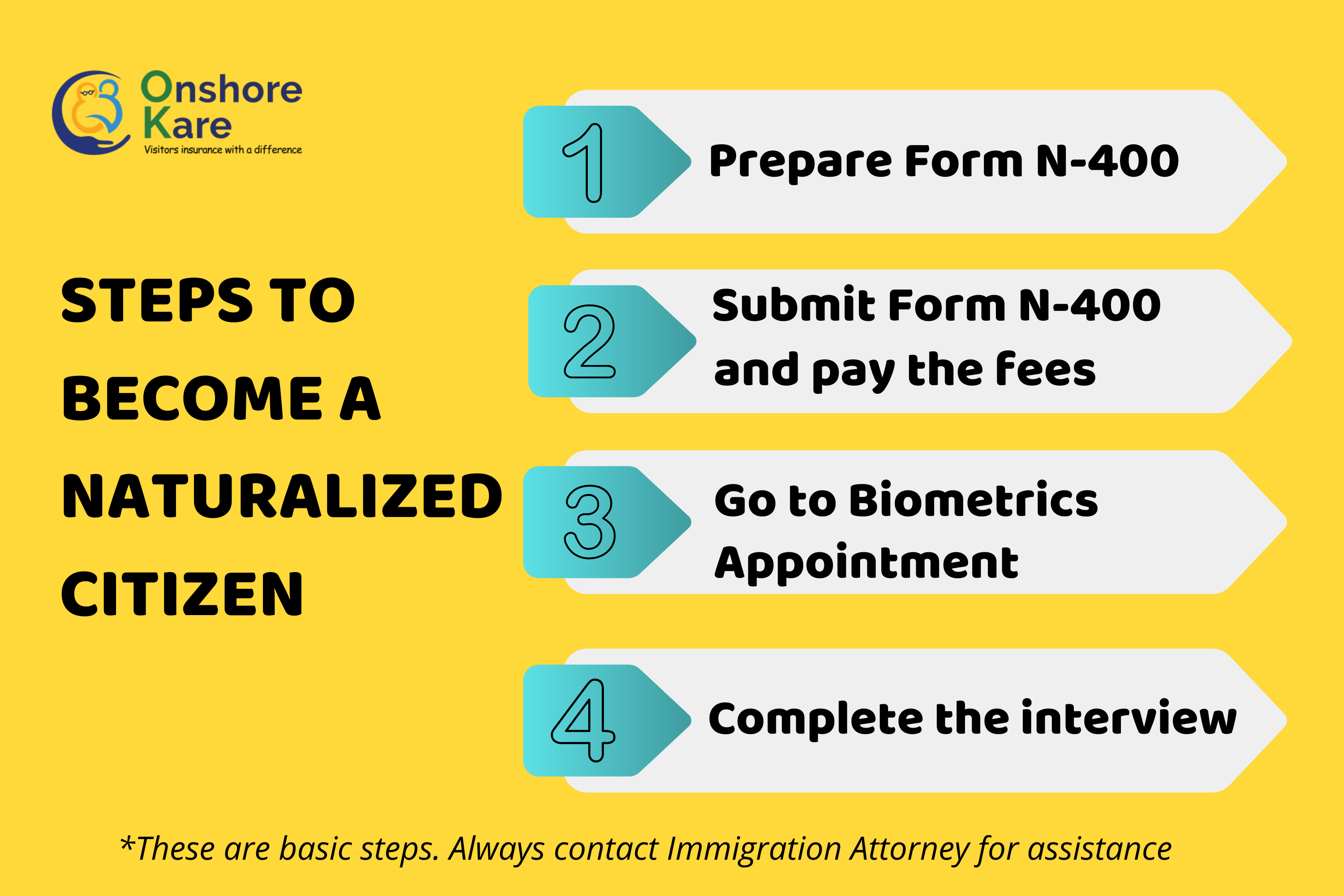
Step 1: Submit a Naturalization Application (Form N-400)
Your application for U.S citizenship begins when you submit your form and supporting documents to the US Citizenship and Immigration Services (USCIS).
Step 2: Attend your biometrics appointment.
As part of your application, you must provide fingerprints, photos, and signatures. The USCIS will send you an appointment letter approximately one month after you submit your application.
Remember to bring your Green Card, at least two forms of identification with your photo, and your appointment letter. The USCIS officer may also request additional information or supporting materials at this stage.
Step 3: Participation in your citizenship interview and examination
You will be called for an interview one year after submitting your application for U.S citizenship. The US Citizenship and Immigration Services will send you a letter with the date and location of your hearing. You can reschedule your appointment if this date does not work for you. However, this could be several months away.
Your citizenship exam is usually scheduled on the same day as your interview. If you fail your language or civics exam, you can only retake the portion of the exam that you failed. Just keep in mind that retaking this test can cause your application to be delayed by up to two months.
Check out the easiest way to make an appointment with USICS if you feel the need to schedule an in-person meeting with USCIS.
Step 4: Letter of Decision from the official government organization
The USCIS has four months to communicate its decision following your exam and interview. You will receive Form N-652, also known as a Notice of Examination Results within this time frame.
Your application may be accepted or rejected. In the second case, you will receive another letter outlining your next steps. You can file an appeal if you disagree with the authority’s decision.
Step 5: Take the Oath of Allegiance and receive your Naturalization Certificate
Your Oath of Allegiance ceremony will take place two to six weeks after your U.S citizenship application has been approved.
The date and location will be reported on Form N-445 (Notice of Naturalization Oath Ceremony), which you will receive from the USCIS.
If you do not attend your naturalization ceremony, your application will be deemed invalid. You can, however, write a letter requesting a new date and explaining your situation.
What is the Cost of Becoming a U.S Citizen?
The cost of becoming a U.S. citizen is broken down into two payments:
The application fee and the biometrics services fee.
- The application fee is $640 and goes toward processing your citizenship application and supporting documents, such as your birth certificate or passport.
- The biometrics services fee is $85 and covers the cost of collecting your fingerprints and photographs at an Application Support Center (ASC).
You’ll pay these fees when you submit your application for naturalization
The total cost of naturalization to become a US citizen is $725. To sum up.
- The N-400 fee is $640. (citizen application fee)
- A fee of $85 is charged for biometric services.
Please keep in mind that these total fees do not include any fees you may have to pay to a service provider or attorney who is assisting you with your application. Also, keep in mind that both the application fee and the biometrics service fee are non-refundable, even if your citizenship application is denied by the USCIS.
What documents are required to be submitted to US Citizenship and Immigration Services to become American citizens?
You must provide supporting evidence as part of the naturalization and citizenship process in the United States. The documents you must provide are determined by your immigration status.
You can use this U.S citizenship documents checklist when submitting Form N-400:
- A duplicate of your Green Card (or Lawful Permanent Residence Card)
- Proof of payment for your application fee
- Evidence of current marital status (even if you are not applying for U.S. citizenship through marriage)
- Two passport-sized photographs (if you submit your petition from abroad)
- Evidence of medical disability (if you wish to request an exemption from the citizenship test based on your health condition)
- Application for a fee reduction or waiver (if needed)
- At your interview, bring a signed request for representation (if you wish to be accompanied by your attorney)
Your supporting documents must be submitted in the format specified by the United States Government. If any of your evidence is written in a foreign language, a certified English translation must be obtained.
Is “continuous residence” in the United States required to obtain U.S citizenship?
One of the requirements for obtaining U.S citizenship is to demonstrate your “continuous presence,” which entails at least five years of residence as a Green Card holder.
You may not stay in the United States for more than six months during your eligible period, according to US immigration law. In other words, if you spend a significant amount of time outside the country, the USCIS will assume that you are renouncing your status.
If you spent a year or more abroad, you would be unable to submit additional documentation to support your petition. You will have to wait until you return to the United States before you can reapply for citizenship.
How long does it take to become a citizen of the United States?
The average U.S citizenship process is extremely complicated and can take up to years. It entails several steps and may necessitate a longer timeline.
Although processing times vary by case, this is an estimated overview of the entire process.
- Form N-400 (Application for Naturalization) processing: 10 months
- Appointment for biometrics: varies depending on your local district
- For the interview and examination for citizenship: 4 months
- To receive a decision letter on your application: Up to 4 months
- Taking the Oath of Allegiance and receiving your Certificate of Citizenship: Up to 2 months
In other words, the naturalization process to become a U.S citizen could take up to two years. You must submit your application correctly the first time to avoid rejection of your citizenship application process. As a result, it is always advisable to contact a law firm and seek legal advice.
The Advantages of US Citizenship
Deportation protection: Obtaining citizenship in the United States protects you and your children from deportation.
Citizenship for your children: Citizenship can be passed down through generations.
Reunification of the family: Other family members can be sponsored to immigrate.
Eligibility for government employment: Citizenship is required for some jobs in the police, military, and government.
The ability to travel: The American passport is widely accepted around the world.
The ability to vote: You have the right to vote for your representatives in Congress and elsewhere.
What is Dual Citizenship or Nationality?
Dual citizenship (or dual nationality) means that a person can be a citizen of both the United States and another country. U.S. law does not require a person to choose one citizenship or another.
If you are a citizen of another country, you should contact its embassy or consulate for information on its:
- Policies and laws, including those governing dual nationality
- Mandatory military service.
- If you have dual citizenship and intend to travel to or from the United States, you must enter and exit the country using a U.S. passport.
If you have questions about your situation, you can consult a law firm with a licensed immigration attorney who specializes in citizenship issues.

Citizenship in the United States for People Born Abroad or in the United States Territories
You are a citizen of the United States if:
- You have a birth certificate from a state in the United States.
- You were born in a United States territory and have a birth certificate from that territory. If you don’t have a birth certificate from your birth country, you may be able to prove your citizenship with other documents.
- You were born outside of the United States to at least one U.S citizen parent, and your parent(s) registered your birth with the US embassy or consulate in that country.
Frequently asked questions
What exactly is a naturalized citizen?
A naturalized citizen is someone who was born outside of the United States but obtained U.S citizenship. Only immigrants who have been lawful permanent residents for 3-5 years or who have served in the military are eligible.
Is there a distinction between naturalization and citizenship?
Yes, naturalization is the process by which an immigrant becomes a citizen of the United States after meeting certain requirements, whereas citizenship applies to anyone who is a United States citizen, regardless of whether they were born in the United States or elsewhere.
Is it necessary to obtain a green card before applying for THE naturalization process in the United States?
The vast majority of naturalization applicants obtain citizenship after obtaining a green card, though certain foreign-born military members or veterans may also be eligible.
What exactly is a ” good moral character”?
The USCIS defines “Good Moral Character” as a set of positive characteristics that characterize an ideal citizen. This implies that you must have not committed any serious crimes in the time leading up to your application. This includes murder, illegal gambling, and immigration fraud and you must not lie during your naturalization interview or at any other time while in the United States.
When can I submit my application to the United States?
Before you can apply for U.S. citizenship, you must have lived in the country for at least five years as a Green Card holder. Your eligibility period begins on the date printed on your Green Card.
Your two years as a conditional resident may still count toward your qualifying period if you obtained your Green Card through marriage. However, you must submit your citizenship application as soon as you have completed your two years in the United States.
Why Is It So Challenging To Obtain A US Citizenship?
It is difficult because of the lengthy processing times, the financial and personal costs involved, and the fact that most immigrants do not have a direct relative who is a U.S citizen. The requirements for obtaining US citizenship are also complicated and may be incomprehensible to some immigrants.
Important Links:
Check out How to apply for US citizenship from the gov websites of USCIS if you require more information about becoming a US citizen
Conclusion
Citizenship in the United States grants a person all of the rights that the country has to offer, such as the right to vote in state and federal elections, petition for family members to immigrate to the United States and live abroad without losing the right to return.
We hope this complete guide has helped you understand the majority of the rules governing U.S citizenship. If you still have doubts, it is best to consult a US immigration attorney for more in-depth answers.